Feature engineering is a preprocessing step in supervised machine learning and statistical modeling which transforms raw data into a more effective set of inputs. Each input comprises several attributes, known as features. By providing models with relevant information, feature engineering significantly enhances their predictive accuracy and decision-making capability. Beyond machine learning, the principles of feature engineering are applied in various scientific fields, including physics. For example, physicists construct dimensionless numbers such as the Reynolds number in fluid dynamics, the Nusselt number in heat transfer, and the Archimedes number in sedimentation. They also develop first approximations of solutions, such as analytical solutions for the strength of materials in mechanics. == Clustering == One of the applications of feature engineering has been clustering of feature-objects or sample-objects in a dataset. Especially, feature engineering based on matrix decomposition has been extensively used for data clustering under non-negativity constraints on the feature coefficients. These include Non-Negative Matrix Factorization (NMF), Non-Negative Matrix-Tri Factorization (NMTF), Non-Negative Tensor Decomposition/Factorization (NTF/NTD), etc. The non-negativity constraints on coefficients of the feature vectors mined by the above-stated algorithms yields a part-based representation, and different factor matrices exhibit natural clustering properties. Several extensions of the above-stated feature engineering methods have been reported in literature, including orthogonality-constrained factorization for hard clustering, and manifold learning to overcome inherent issues with these algorithms. Other classes of feature engineering algorithms include leveraging a common hidden structure across multiple inter-related datasets to obtain a consensus (common) clustering scheme. An example is Multi-view Classification based on Consensus Matrix Decomposition (MCMD), which mines a common clustering scheme across multiple datasets. MCMD is designed to output two types of class labels (scale-variant and scale-invariant clustering), and: is computationally robust to missing information, can obtain shape- and scale-based outliers, and can handle high-dimensional data effectively. Coupled matrix and tensor decompositions are popular in multi-view feature engineering. == Predictive modelling == Feature engineering in machine learning and statistical modeling involves selecting, creating, transforming, and extracting data features. Key components include feature creation from existing data, transforming and imputing missing or invalid features, reducing data dimensionality through methods like Principal Components Analysis (PCA), Independent Component Analysis (ICA), and Linear Discriminant Analysis (LDA), and selecting the most relevant features for model training based on importance scores and correlation matrices. Features vary in significance. Even relatively insignificant features may contribute to a model. Feature selection can reduce the number of features to prevent a model from becoming too specific to the training data set (overfitting). Feature explosion occurs when the number of identified features is too large for effective model estimation or optimization. Common causes include: Feature templates - implementing feature templates instead of coding new features Feature combinations - combinations that cannot be represented by a linear system Feature explosion can be limited via techniques such as regularization, kernel methods, and feature selection. == Automation == Automation of feature engineering is a research topic that dates back to the 1990s. Machine learning software that incorporates automated feature engineering has been commercially available since 2016. Related academic literature can be roughly separated into two types: Multi-relational Decision Tree Learning (MRDTL) uses a supervised algorithm that is similar to a decision tree. Deep Feature Synthesis uses simpler methods. === Multi-relational Decision Tree Learning (MRDTL) === Multi-relational Decision Tree Learning (MRDTL) extends traditional decision tree methods to relational databases, handling complex data relationships across tables. It innovatively uses selection graphs as decision nodes, refined systematically until a specific termination criterion is reached. Most MRDTL studies base implementations on relational databases, which results in many redundant operations. These redundancies can be reduced by using techniques such as tuple id propagation. === Open-source implementations === There are a number of open-source libraries and tools that automate feature engineering on relational data and time series: featuretools is a Python library for transforming time series and relational data into feature matrices for machine learning. MCMD: An open-source feature engineering algorithm for joint clustering of multiple datasets. OneBM or One-Button Machine combines feature transformations and feature selection on relational data with feature selection techniques. OneBM helps data scientists reduce data exploration time allowing them to try and error many ideas in short time. On the other hand, it enables non-experts, who are not familiar with data science, to quickly extract value from their data with a little effort, time, and cost. getML community is an open source tool for automated feature engineering on time series and relational data. It is implemented in C/C++ with a Python interface. It has been shown to be at least 60 times faster than tsflex, tsfresh, tsfel, featuretools or kats. tsfresh is a Python library for feature extraction on time series data. It evaluates the quality of the features using hypothesis testing. tsflex is an open source Python library for extracting features from time series data. Despite being 100% written in Python, it has been shown to be faster and more memory efficient than tsfresh, seglearn or tsfel. seglearn is an extension for multivariate, sequential time series data to the scikit-learn Python library. tsfel is a Python package for feature extraction on time series data. kats is a Python toolkit for analyzing time series data. === Deep feature synthesis === The deep feature synthesis (DFS) algorithm beat 615 of 906 human teams in a competition. == Feature stores == The feature store is where the features are stored and organized for the explicit purpose of being used to either train models (by data scientists) or make predictions (by applications that have a trained model). It is a central location where you can either create or update groups of features created from multiple different data sources, or create and update new datasets from those feature groups for training models or for use in applications that do not want to compute the features but just retrieve them when it needs them to make predictions. A feature store includes the ability to store code used to generate features, apply the code to raw data, and serve those features to models upon request. Useful capabilities include feature versioning and policies governing the circumstances under which features can be used. Feature stores can be standalone software tools or built into machine learning platforms. == Alternatives == Feature engineering can be a time-consuming and error-prone process, as it requires domain expertise and often involves trial and error. Deep learning algorithms may be used to process a large raw dataset without having to resort to feature engineering. However, deep learning algorithms still require careful preprocessing and cleaning of the input data. In addition, choosing the right architecture, hyperparameters, and optimization algorithm for a deep neural network can be a challenging and iterative process.
Automated Lip Reading
Automated Lip Reading (ALR) is a software technology developed by speech recognition expert Frank Hubner. A video image of a person talking can be analysed by the software. The shapes made by the lips can be examined and then turned into sounds. The sounds are compared to a dictionary to create matches to the words being spoken. The technology was used successfully to analyse silent home movie footage of Adolf Hitler taken by Eva Braun at their Bavarian retreat Berghof. The video, with words, was included in a documentary titled "Hitler's Private World", Revealed Studios, 2006 Source: New Technology catches Hitler off guard
Embodied cognitive science
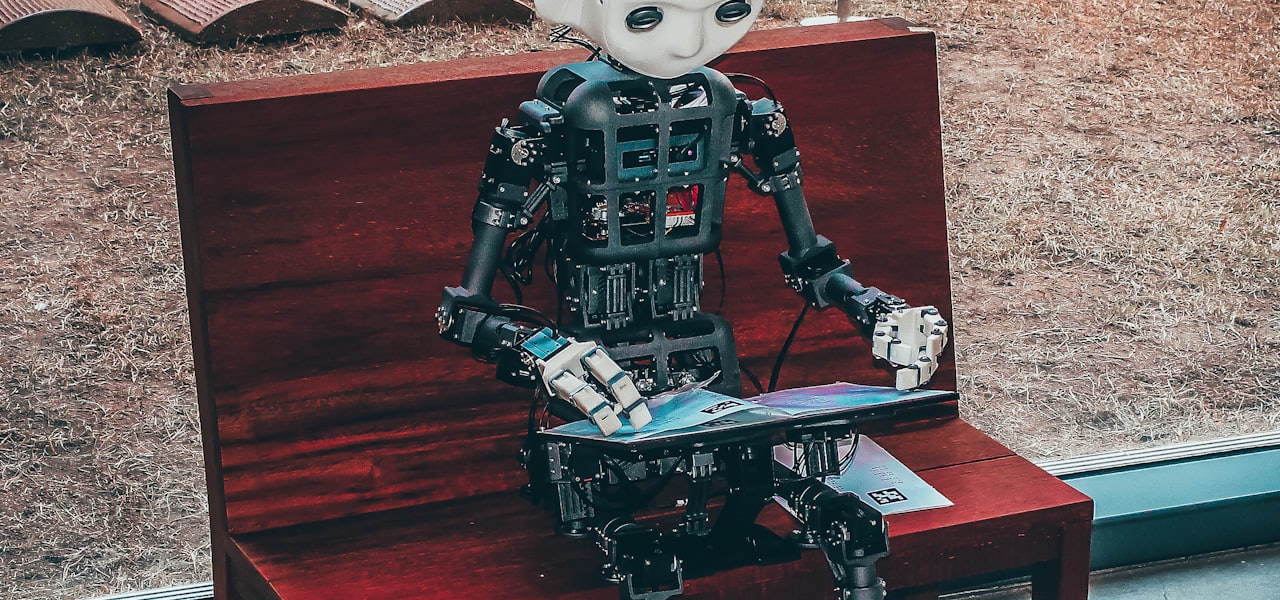
Embodied cognitive science is an interdisciplinary field of research, the aim of which is to explain the mechanisms underlying intelligent behavior. It comprises three main methodologies: the modeling of psychological and biological systems in a holistic manner that considers the mind and body as a single entity; the formation of a common set of general principles of intelligent behavior; and the experimental use of robotic agents in controlled environments. == Contributors == Embodied cognitive science borrows heavily from embodied philosophy and the related research fields of cognitive science, psychology, neuroscience and artificial intelligence. Contributors to the field include: From the perspective of neuroscience, Gerald Edelman of the Neurosciences Institute at La Jolla, Francisco Varela of CNRS in France, and J. A. Scott Kelso of Florida Atlantic University From the perspective of psychology, Lawrence Barsalou, Michael Turvey, Vittorio Guidano and Eleanor Rosch From the perspective of linguistics, Gilles Fauconnier, George Lakoff, Mark Johnson, Leonard Talmy and Mark Turner From the perspective of language acquisition, Eric Lenneberg and Philip Rubin at Haskins Laboratories From the perspective of anthropology, Edwin Hutchins, Bradd Shore, James Wertsch and Merlin Donald. From the perspective of autonomous agent design, early work is sometimes attributed to Rodney Brooks or Valentino Braitenberg From the perspective of artificial intelligence, Understanding Intelligence by Rolf Pfeifer and Christian Scheier or How the Body Shapes the Way We Think, by Rolf Pfeifer and Josh C. Bongard From the perspective of philosophy, Andy Clark, Dan Zahavi, Shaun Gallagher, and Evan Thompson In 1950, Alan Turing proposed that a machine may need a human-like body to think and speak: It can also be maintained that it is best to provide the machine with the best sense organs that money can buy, and then teach it to understand and speak English. That process could follow the normal teaching of a child. Things would be pointed out and named, etc. Again, I do not know what the right answer is, but I think both approaches should be tried. == Traditional cognitive theory == Embodied cognitive science is an alternative theory to cognition in which it minimizes appeals to computational theory of mind in favor of greater emphasis on how an organism's body determines how and what it thinks. Traditional cognitive theory is based mainly around symbol manipulation, in which certain inputs are fed into a processing unit that produces an output. These inputs follow certain rules of syntax, from which the processing unit finds semantic meaning. Thus, an appropriate output is produced. For example, a human's sensory organs are its input devices, and the stimuli obtained from the external environment are fed into the nervous system which serves as the processing unit. From here, the nervous system is able to read the sensory information because it follows a syntactic structure, thus an output is created. This output then creates bodily motions and brings forth behavior and cognition. Of particular note is that cognition is sealed away in the brain, meaning that mental cognition is cut off from the external world and is only possible by the input of sensory information. == The embodied cognitive approach == Embodied cognitive science differs from the traditionalist approach in that it denies the input-output system. This is chiefly due to the problems presented by the Homunculus argument, which concluded that semantic meaning could not be derived from symbols without some kind of inner interpretation. If some little man in a person's head interpreted incoming symbols, then who would interpret the little man's inputs? Because of the specter of an infinite regress, the traditionalist model began to seem less plausible. Thus, embodied cognitive science aims to avoid this problem by defining cognition in three ways. === Physical attributes of the body === The first aspect of embodied cognition examines the role of the physical body, particularly how its properties affect its ability to think. This part attempts to overcome the symbol manipulation component that is a feature of the traditionalist model. Depth perception, for instance, can be better explained under the embodied approach due to the sheer complexity of the action. Depth perception requires that the brain detect the disparate retinal images obtained by the distance of the two eyes. In addition, body and head cues complicate this further. When the head is turned in a given direction, objects in the foreground will appear to move against objects in the background. From this, it is said that some kind of visual processing is occurring without the need of any kind of symbol manipulation. This is because the objects appearing to move the foreground are simply appearing to move. This observation concludes then that depth can be perceived with no intermediate symbol manipulation necessary. A more poignant example exists through examining auditory perception. Generally speaking the greater the distance between the ears, the greater the possible auditory acuity. Also relevant is the amount of density in between the ears, for the strength of the frequency wave alters as it passes through a given medium. The brain's auditory system takes these factors into account as it process information, but again without any need for a symbolic manipulation system. This is because the distance between the ears for example does not need symbols to represent it. The distance itself creates the necessary opportunity for greater auditory acuity. The amount of density between the ears is similar, in that it is the actual amount itself that simply forms the opportunity for frequency alteration. Thus under consideration of the physical properties of the body, a symbolic system is unnecessary and an unhelpful metaphor. === The body's role in the cognitive process === The second aspect draws heavily from George Lakoff's and Mark Johnson's work on concepts. They argued that humans use metaphors whenever possible to better explain their external world. Humans also have a basic stock of concepts in which other concepts can be derived from. These basic concepts include spatial orientations such as up, down, front, and back. Humans can understand what these concepts mean because they can directly experience them from their own bodies. For example, because human movement revolves around standing erect and moving the body in an up-down motion, humans innately have these concepts of up and down. Lakoff and Johnson contend this is similar with other spatial orientations such as front and back too. As mentioned earlier, these basic stocks of spatial concepts are the basis in which other concepts are constructed. Happy and sad for instance are seen now as being up or down respectively. When someone says they are feeling down, what they are really saying is that they feel sad for example. Thus the point here is that true understanding of these concepts is contingent on whether one can have an understanding of the human body. So the argument goes that if one lacked a human body, they could not possibly know what up or down could mean, or how it could relate to emotional states. [I]magine a spherical being living outside of any gravitational field, with no knowledge or imagination of any other kind of experience. What could UP possibly mean to such a being? While this does not mean that such beings would be incapable of expressing emotions in other words, it does mean that they would express emotions differently from humans. Human concepts of happiness and sadness would be different because human would have different bodies. So then an organism's body directly affects how it can think, because it uses metaphors related to its body as the basis of concepts. === Interaction of local environment === A third component of the embodied approach looks at how agents use their immediate environment in cognitive processing. Meaning, the local environment is seen as an actual extension of the body's cognitive process. The example of a personal digital assistant (PDA) is used to better imagine this. Echoing functionalism (philosophy of mind), this point claims that mental states are individuated by their role in a much larger system. So under this premise, the information on a PDA is similar to the information stored in the brain. So then if one thinks information in the brain constitutes mental states, then it must follow that information in the PDA is a cognitive state too. Consider also the role of pen and paper in a complex multiplication problem. The pen and paper are so involved in the cognitive process of solving the problem that it seems ridiculous to say they are somehow different from the process, in very much the same way the PDA is used for information like the brain. Another example examines how humans control and manipulate their environment
Biohybrid system
Biohybrid systems refer to the integration of biological materials, such as cells or tissues, with artificial components, including electronics or mechanical structure. This combination incorporates the capabilities of living organisms with the precision of man-made technology. As a result, these systems perform tasks that neither biology nor machines could achieve independently. Biohybrid systems might use lab-cultured muscle cells to power small robots or combine sensors with living tissue for better health sensing. The intent behind these systems is to combine the benefits of biological and technological components to introduce new solutions for complex medical challenges. Biohybrid systems may have transformative potential across sectors, such as robotics to create actuators and sensors that mimic natural muscle and nerve function, medicine in developing smart implants and drug delivery systems, in prosthetics for enhancing user control through neural or muscular interfaces and environmental sustainability for deploying biohybrid solutions for pollution sensing or remediation. == Origin == The term "biohybrid" is a compound of "bio" from biology (meaning life) and "hybrid" (referring to a combination of distinct elements), denoting a field of study. Its use helps distinguish such systems from purely biological constructs or entirely synthetic machines. Early academic mentions may include bio actuated robotics papers and foundational tissue-robot integration studies published in journals like Nature Biotechnology or Science Robotics. The emergence of the term reflects a growing recognition of the need to describe systems that do not fit cleanly into traditional categories. == Design principles == One of the most significant biohybrid challenges is to engineer interfaces between living tissue and artificial materials that are efficient. This means having precise control over adhesion at the surface, diffusion of nutrients, and signal conduction. Actuation mechanisms within the heart of these systems generate movement or mechanical response. These may be in the form of living muscle cells such as skeletal myocytes or cardiomyocytes, soft pneumatic actuators, or electrical stimulation-responsive tissues. Materials selection is equally critical. Hydrogels, elastomers like PDMS (polydimethylsiloxane), and biopolymers are commonly used due to their softness and biocompatibility. These materials must support cell viability, resist immune attack, and allow the integration of mechanical or electrical components. == Key components == At their core, biohybrid systems work by bridging living biological parts with technology. Through this integration, functionality that neither system could accomplish singularly is possible. Biological parts may be cells, tissues, or even organs—occasionally cultured in a laboratory setting. These biological parts carry out biologically inspired behaviors, such as muscle contraction or chemical sensing in the body. Technological components may constitute devices like sensors, electronic components, and mechanical structure. These manipulate the system, supply power, or transfer data. An example is a sensor that is implantable within a body and detects glucose levels as it sends information to a smart phone. By integrating these artificial and biological parts, biohybrid systems can perform advanced functions, such as tissue regeneration, real-time health monitoring, or the recovery of motor function in paralysis patients. Biohybrid systems generally consist of two major components: the biological and the mechanical. Biological components may include muscle cells for contraction, endothelial cells for vascularization, and stem cells for regenerative capabilities. Mechanical components comprise soft actuators that mimic organic motion, synthetic scaffolds that provide support and structure, and microfluidic systems that facilitate the delivery of nutrients and removal of waste. These components are combined in a manner that allows for dynamic, lifelike behavior—such as the contraction of tissue or the propagation of mechanical waves—while maintaining biocompatibility and durability. == Applications == The range of applications for biohybrid systems is broad and continuously expanding. In robotics, biohybrid structures have been used to engineer microscopic, muscle-driven machines, such as Harvard University's biohybrid stingray robot. In medical applications, they offer new alternatives for organ repair and augmentation, including biohybrid heart valves and esophageal scaffolds. Biohybrids are also promising in neural interfaces, where the goal is to create long-lasting, stable interaction between mechanical devices and brain tissue. Muscle-actuated drug response platforms are under exploration in pharmacology for modelling and real-time screening. == Examples == Several high-profile research projects have demonstrated the potential of biohybrid systems: Harvard researchers developed a biohybrid swimming ray powered by rat cardiac cells layered onto a gold skeleton, mimicking the motion of a real stingray. At the Massachusetts Institute of Technology, a cardiac pump actuated entirely by living heart muscle cells was engineered to simulate the behavior of a beating heart. Bio actuated soft robots have been built to simulate gut peristalsis, using muscle contractions to replicate natural wave-like movement in the digestive tract. == Challenges and limitations == As with many technologies that involve living systems, biohybrid systems raise important ethical and biomedical questions. Cell sourcing remains a key issue, particularly when embryonic or animal-derived cells are used. Long-term viability is another concern—living tissues must be kept alive with nutrients and oxygen, and they often degrade or elicit immune responses when implanted. Powering these biological parts presents logistical and ethical hurdles as well. Systems must either include internal mechanisms for nutrient delivery or be supported externally, which can limit portability and independence. == Future directions == Researchers are exploring self-directed, self-regulated organ substitutes and regenerative implants that can respond to their surroundings in real-time. These systems may be integrated with artificial intelligence to make them adjust to stimuli and coordinate complex behaviors. Future potential applications are wearable biohybrid systems for rehabilitation, space medicine devices for long-duration missions, and implantable devices that integrate into human physiology.
AI nationalism
AI nationalism is the idea that nations should develop and control their own artificial intelligence technologies to advance their own interests and ensure technological sovereignty. This concept is gaining traction globally, leading countries to implement new laws, form strategic alliances, and invest significantly in domestic AI capabilities. == Global trends and national strategies == In 2018, British technology investor Ian Hogarth published an influential essay titled AI Nationalism. He argued that as AI gains more power and its economic and military significance expands, governments will take measures to bolster their own domestic AI industries, and predicted that the advancement of machine learning systems would lead to what he termed "AI nationalism." He anticipated that this rise in AI would accelerate a global arms race, resulting in more closed economies, restrictions on foreign acquisitions, and limitations on the movement of talent. Hogarth predicted that AI policy would become a central focus of government agendas. He also criticized Britain’s approach to AI strategy, citing the sale of London-based DeepMind—one of the leading AI laboratories, acquired by Google for a relatively modest £400 million in 2014—as a significant misstep. AI nationalism is chiefly reflected in the escalating rhetoric of an artificial intelligence arms race, portraying AI development as a zero-sum game where the winner gains significant economic, political, and military advantages. This mindset, as highlighted in a 2017 Pentagon report, warns that sharing AI technology could erode technological supremacy and enhance rivals' capabilities. The winner-takes-all mentality of AI nationalism poses risks including unsafe AI development, increased geopolitical tension, and potential military aggression (such as cyberattacks or targeting AI professionals). Several countries, including Canada, France, and India, have formulated national strategies to advance their positions in AI. In the United States, a leading player in the global AI arena, trade policies have been enacted to restrict China's access to critical microchips, reflecting a strategic effort to maintain a technological edge. The United States’ National Security Commission on Artificial Intelligence (NSCAI) frames AI development as a critical aspect of a broader technology competition crucial for national success. It emphasizes the need to outpace China in AI to maintain strategic advantage, reflecting AI nationalism by linking geopolitical power directly to advancements in AI. France has seen notable governmental support for local AI startups, particularly those specializing in language technologies that cater to French and other non-English languages. In Saudi Arabia, Crown Prince Mohammed bin Salman is investing billions in AI research and development. The country has actively collaborated with major technology firms such as Amazon, IBM, and Microsoft to establish itself as a prominent AI hub. == Historical and cultural context == AI nationalism is seen as deeply connected to historical racism and imperialism. It is viewed not merely as a technological competition but as a contest over racial and civilizational superiority. Historically, technological achievements were often used to justify colonialism and racial hierarchies, with Western societies perceiving their advancements as evidence of superiority. In the context of AI, this historical context continues to shape views on intelligence and development. Some argue that AI nationalism reinforces the idea of fundamental civilizational divides, especially between the Western world and China. This perspective often frames China's progress in AI as a direct challenge to Western values, presenting the AI competition as a struggle over values. AI nationalism is said to draw from long-standing anti-Asian stereotypes, such as the "Yellow Peril," which portray Asian nations as threats to Western civilization. This viewpoint links Asian technological advances with dehumanization and artificiality, reflecting persistent anxieties about China's growing role in the global tech landscape. == Implications == AI nationalism is seen as a component of a broader trend towards the fragmentation of the internet, where digital services are increasingly influenced by local regulations and national interests. This shift is creating a new technological landscape in which the impact of artificial intelligence on individuals' lives can vary significantly depending on their geographic location. J. Paul Goode argues that AI nationalism may exacerbate existing societal divisions by promoting the development of systems that embed cultural biases, thereby privileging certain groups while disadvantaging others.
GasBuddy
GasBuddy is a technology company headquartered in Dallas, United States, that offers mobile applications and websites for tracking crowd-sourced locations and prices of gas stations and convenience stores in the United States and Canada. Their platforms offer information sourced from users, gas station operators, and partner companies. They also provide business-to-business services to gas stations and convenience store owners. == History == GasBuddy was founded in Minneapolis in 2000 by Dustin Coupal, Jason Toews as a community website for sharing gas prices. In 2004, they filed as a for-profit corporation in Minnesota under the name GasBuddy Organization Inc. In 2009, GasBuddy launched OpenStore, a platform that allows convenience stores to build and manage their own mobile apps. In 2010, the company launched its own mobile apps that allowed users to input gas prices from their smartphones. In 2013, Oil Price Information Service (OPIS), a subsidiary of UCG, acquired GasBuddy. OPIS is a provider of petroleum pricing and news for businesses. In 2016, IHS acquired OPIS, separating from GasBuddy, which remained with UCG as a subsidiary company. Initially only available in the United States and Canada, GasBuddy launched in Australia in March 2016. Also in that year, GasBuddy released a completely redesigned app, its first major redesign since its release in 2010. GasBuddy also unveiled a new logo and launched GasBuddy Business Pages. GasBuddy shut down the Australian version of their app in 2022. In 2017, GasBuddy launched a gas savings program titled "Pay with GasBuddy" intended to let consumers save at gas stations in the United States. In the same year, GasBuddy was involved in a lawsuit with Reveal Mobile, a location-based marketing company, over the sale of user location data. It was revealed that GasBuddy sold information on more than 4.5 million users to Reveal each month for $9.50 per 1000 users. According to CNET, that information included "users' latitude, longitude, IP address, and time stamps on the data collected," which sparked concern in the media and between its users. In 2021, the GasBuddy app rose to the most popular app on both Android and iPhone platforms in the wake of the Colonial Pipeline ransomware attack PDI acquired GasBuddy in 2021.
Spreading activation
Spreading activation is a method for searching associative networks, biological and artificial neural networks, or semantic networks. The search process is initiated by labeling a set of source nodes (e.g. concepts in a semantic network) with weights or "activation" and then iteratively propagating or "spreading" that activation out to other nodes linked to the source nodes. Most often these "weights" are real values that decay as activation propagates through the network. When the weights are discrete this process is often referred to as marker passing. Activation may originate from alternate paths, identified by distinct markers, and terminate when two alternate paths reach the same node. However brain studies show that several different brain areas play an important role in semantic processing. Spreading activation in semantic networks as a model were invented in cognitive psychology to model the fan out effect. Spreading activation can also be applied in information retrieval, by means of a network of nodes representing documents and terms contained in those documents. == Cognitive psychology == As it relates to cognitive psychology, spreading activation is the theory of how the brain iterates through a network of associated ideas to retrieve specific information. The spreading activation theory presents the array of concepts within our memory as cognitive units, each consisting of a node and its associated elements or characteristics, all connected together by edges. A spreading activation network can be represented schematically, in a sort of web diagram with shorter lines between two nodes meaning the ideas are more closely related and will typically be associated more quickly to the original concept. In memory psychology, the spreading activation model holds that people organize their knowledge of the world based on their personal experiences, which in turn form the network of ideas that is the person's knowledge of the world. When a word (the target) is preceded by an associated word (the prime) in word recognition tasks, participants seem to perform better in the amount of time that it takes them to respond. For instance, subjects respond faster to the word "doctor" when it is preceded by "nurse" than when it is preceded by an unrelated word like "carrot". This semantic priming effect with words that are close in meaning within the cognitive network has been seen in a wide range of tasks given by experimenters, ranging from sentence verification to lexical decision and naming. As another example, if the original concept is "red" and the concept "vehicles" is primed, they are much more likely to say "fire engine" instead of something unrelated to vehicles, such as "cherries". If instead "fruits" was primed, they would likely name "cherries" and continue on from there. The activation of pathways in the network has everything to do with how closely linked two concepts are by meaning, as well as how a subject is primed. == Algorithm == A directed graph is populated by Nodes[ 1...N ] each having an associated activation value A [ i ] which is a real number in the range [0.0 ... 1.0]. A Link[ i, j ] connects source node[ i ] with target node[ j ]. Each edge has an associated weight W [ i, j ] usually a real number in the range [0.0 ... 1.0]. Parameters: Firing threshold F, a real number in the range [0.0 ... 1.0] Decay factor D, a real number in the range [0.0 ... 1.0] Steps: Initialize the graph setting all activation values A [ i ] to zero. Set one or more origin nodes to an initial activation value greater than the firing threshold F. A typical initial value is 1.0. For each unfired node [ i ] in the graph having an activation value A [ i ] greater than the node firing threshold F: For each Link [ i, j ] connecting the source node [ i ] with target node [ j ], adjust A [ j ] = A [ j ] + (A [ i ] W [ i, j ] D) where D is the decay factor. If a target node receives an adjustment to its activation value so that it would exceed 1.0, then set its new activation value to 1.0. Likewise maintain 0.0 as a lower bound on the target node's activation value should it receive an adjustment to below 0.0. Once a node has fired it may not fire again, although variations of the basic algorithm permit repeated firings and loops through the graph. Nodes receiving a new activation value that exceeds the firing threshold F are marked for firing on the next spreading activation cycle. If activation originates from more than one node, a variation of the algorithm permits marker passing to distinguish the paths by which activation is spread over the graph The procedure terminates when either there are no more nodes to fire or in the case of marker passing from multiple origins, when a node is reached from more than one path. Variations of the algorithm that permit repeated node firings and activation loops in the graph, terminate after a steady activation state, with respect to some delta, is reached, or when a maximum number of iterations is exceeded. == Examples ==